How to store bikes and sports gear in a small entryway
· Editorial team newsfromboston24.com
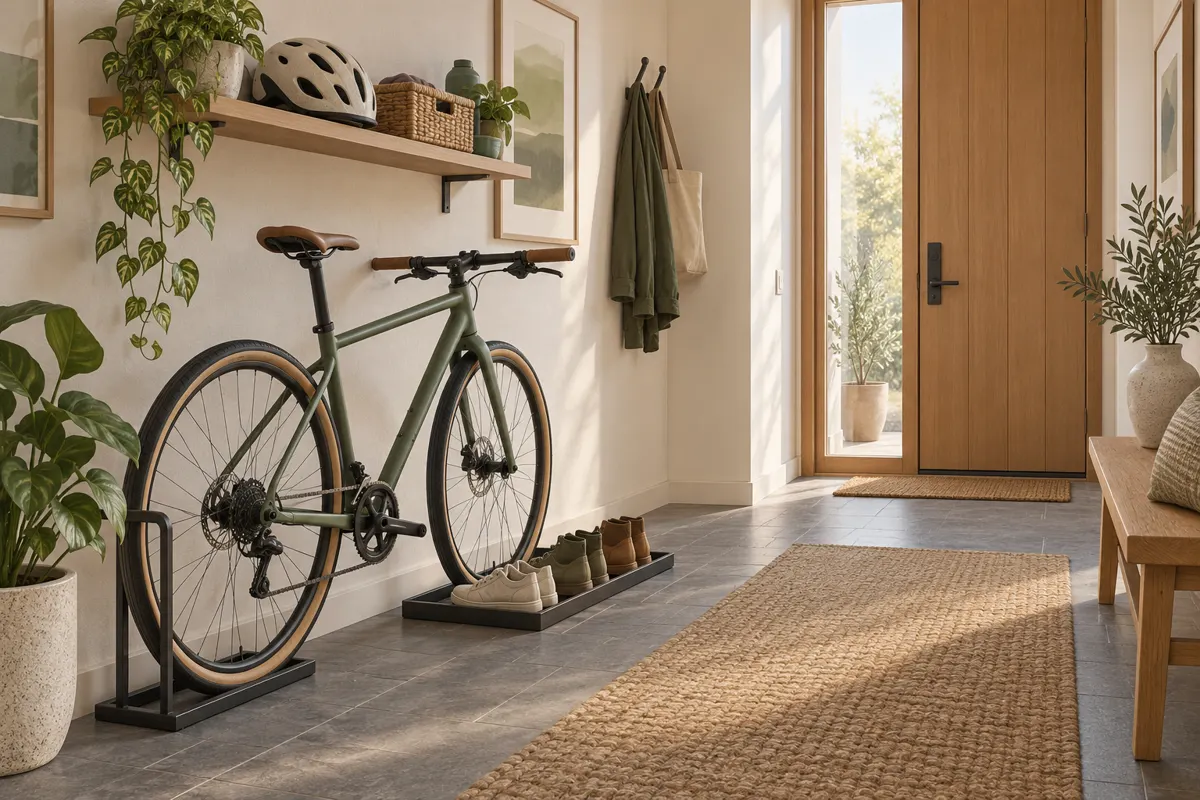
Give bikes a defined parking spot, keep damp gear separate from clean equipment, and leave a clear route through the entryway. Start by measuring the space with the door open and the bike in position. The proposed setup below uses a freestanding bike stand, a washable landing area, and a few easy-to-reach containers.
Measure the route before choosing storage
An empty corner can look suitable until handlebars, pedals, and an opening door compete for it. Measure the bike itself, including its widest points, rather than relying only on the dimensions of a rack. Include room to roll it into place and take it out without lifting it over shoes or bags.
- Open the entry door through its full swing and check access to nearby doors, closets, and stairs.
- Place the bike where you intend to park it. Try both directions; handlebar and pedal positions may affect the fit.
- Walk past it carrying your usual grocery bags or work bag. Check that you can reach the door handle comfortably.
- Mark the proposed storage footprint with removable tape that is suitable for your floor. Keep containers within that boundary.
Keep exits and shared corridors clear. If the bike only fits by blocking a door or forcing people to squeeze around it, choose another storage location and reserve the entryway for everyday accessories.
Choose a bike position you can use every day
For a proposed renter-friendly starting point, try a freestanding floor stand along a wall. Check that the stand suits your bike’s tire size and holds it securely. Position the bike so that projecting pedals and handlebars stay out of the walking route. Avoid making a loose bike lean against the door or a lightweight shelf.
A vertical freestanding rack is another option when floor length is limited, but it still needs clearance for the handlebars and loading movement. Before choosing one, consider whether everyone who uses the bike can manage the required lift. Follow the rack’s load limits and assembly instructions, including any anchoring requirements.
Wall storage may suit some homes, provided the lease allows installation and the mounting method is appropriate for the wall and bike weight. Adhesive utility hooks should not be assumed suitable for holding a bicycle. If two bikes cannot fit while preserving access, prioritize the one used most often and find another location for the second.
Give wet and dirty gear a separate landing area
Place a washable tray or mat beside the bike parking spot for muddy shoes and damp equipment. Choose a shallow design that does not create an obstacle, and check that its backing is suitable for your floor. Leave enough room to remove footwear without stepping into the main walkway.
- Keep a small cloth nearby for wiping visible water or dirt from the bike before parking.
- Empty wet clothing from sports bags when you arrive, then move it to an appropriate drying or laundry area.
- Let damp equipment dry according to its care instructions before putting it into closed storage.
- Clean the tray and remove accumulated grit before it spreads through the entryway.
Treat this area as a temporary landing place. Clean helmets, gloves, and fresh clothing belong elsewhere, away from muddy footwear.
Store small equipment where it is easy to return
The proposed arrangement is one open container per person, plus a shared container for balls or other frequently used equipment. Use a shallow shelf or stable storage unit that fits inside your measured footprint. Follow its anchoring instructions, and keep heavy items low.
- Keep daily accessories together: gloves, lights, reflective gear, and the bike lock.
- Give helmets a dedicated shelf space where they will not be crushed beneath bags.
- Contain balls in a basket so they cannot roll into the walking route.
- Store long equipment upright only in a holder designed to keep it secure.
- Move seasonal or rarely used equipment out of the entryway.
Make the return routine short
Arrange storage in the order you use it: park the bike, remove dirty footwear, empty damp gear, and return clean accessories. Each item should have an obvious place that does not require moving several other things.
As a proposed weekly reset, remove stray items, wipe the landing area, and check that the door still opens freely. If gear repeatedly ends up on the floor, adjust its storage position or reduce what stays here. Use the walking route and ease of returning equipment to judge whether the arrangement works.